At 1st Option Title, we know that a home represents far more than a real estate transaction. It is where families gather, memories are created, children grow up, and people build their futures.
When severe storms, heavy rainfall, dangerous winds, or flash flooding threaten the communities we serve, our first concern is not about property values, closings, or paperwork.
It is about people.
To our clients, real estate partners, homeowners, neighbors, and families throughout Texas and Arizona: your safety matters to us.
From the Dallas–Fort Worth area and San Antonio to our communities throughout Arizona, severe weather can develop quickly, sometimes leaving families with only minutes to make important decisions.
Texas residents may encounter severe thunderstorms, tornadoes, hail, damaging winds, and flooding. Arizona residents face many of these same threats, particularly dangerous flash flooding during monsoon season.
Regardless of where you live, preparation and reliable information can make an enormous difference.
We have put together this comprehensive guide to help you protect your family before and during a storm, understand what to do when the weather clears, and navigate the sometimes overwhelming process of recovering from property damage.
Most importantly, we want you to remember that homes can be repaired and belongings can be replaced. People cannot.
Before the Storm: Protecting Your Home and Preparing Your Family
Storm preparation should begin before the first emergency warning appears on your phone.
Start by reviewing the condition of your property. Inspect your roof from the ground for visible damage, check gutters and drainage systems for debris, and make sure water can move away from your foundation. Avoid climbing onto roofs or ladders when severe weather is approaching.
Secure patio furniture, umbrellas, decorations, trash containers, and other outdoor objects that could become dangerous projectiles in high winds. Move vehicles into covered parking when practical, particularly when hail is forecast.
If your home is in an area vulnerable to flooding, move important documents, electronics, medications, and valuable belongings to higher locations. Consider using waterproof containers for birth certificates, identification, insurance documents, mortgage records, and other essential paperwork.
Families should also establish an emergency communication plan. Everyone in the household should know where to shelter, how to contact one another, and where to meet if evacuation becomes necessary.
Keep emergency supplies accessible, including drinking water, nonperishable food, flashlights, batteries, necessary medications, a first-aid kit, portable phone chargers, and supplies for children and pets.
For homes in areas where flooding is possible, understand evacuation routes before they are needed. Never assume that a road normally safe to travel will remain passable during a major storm.
Know Your Insurance Coverage Before You Need It
One of the most important steps homeowners can take is reviewing their insurance policies before a disaster occurs.
Standard homeowners insurance may cover certain types of wind or hail damage, depending on the policy, but generally does not cover flooding caused by rising surface water.
Flood insurance is typically a separate policy, and coverage may be subject to waiting periods and exclusions.
Review your coverage limits, deductibles, exclusions, and the contact information for your insurance company.
Photograph the interior and exterior of your home before severe weather arrives. A dated photographic inventory of your property's condition and valuable belongings can become extremely useful if you later need to establish the extent of storm-related damage.
During the Storm: Your Life Is More Important Than Your Property
When severe weather arrives, protecting yourself and your family becomes the priority.
Stay indoors and away from windows during damaging winds, hail, and severe thunderstorms. Follow local emergency alerts and seek shelter immediately if tornado warnings are issued.
During a tornado warning, move to a basement or a small interior room on the lowest level of a sturdy building, away from windows. Avoid large open rooms and manufactured homes when safer shelter is available.
If officials issue evacuation instructions because of flooding or another dangerous condition, follow them promptly.
Do not delay evacuation to gather belongings, photograph property damage, or protect possessions.
Never Drive Through Floodwater
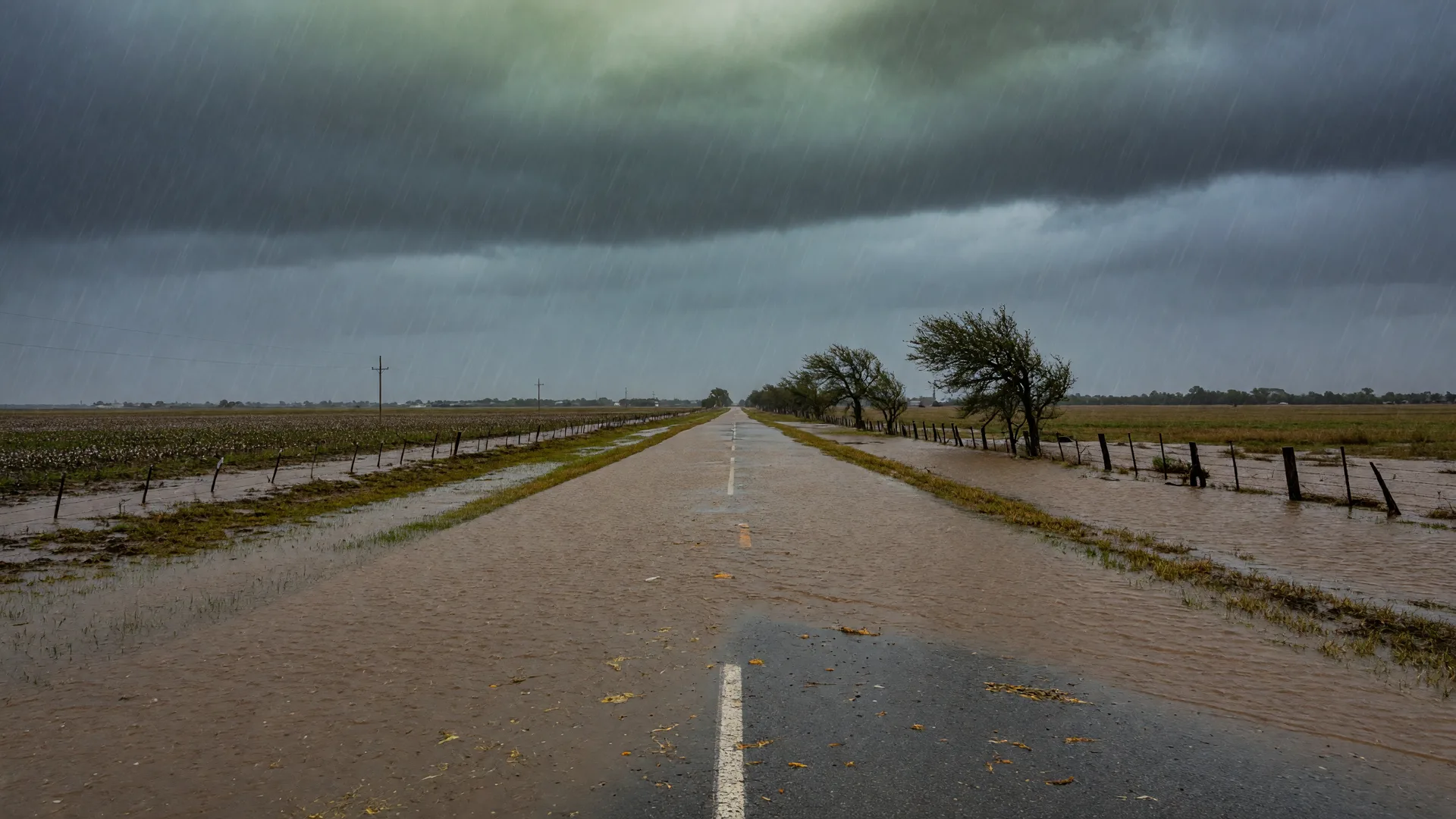
One of the most dangerous mistakes people make during storms is attempting to cross flooded roads.
Water can conceal washed-out pavement, deep holes, dangerous currents, and debris. A roadway that appears shallow may be significantly more dangerous than it looks.
According to National Weather Service safety guidance, approximately six inches of fast-moving water can knock an adult off their feet, while around twelve inches of moving water can carry away many passenger vehicles. Deeper water can sweep away larger vehicles.
These are examples of how little water may be dangerous—not safe thresholds for crossing.
Never attempt to drive through a flooded roadway, even if you have a large truck, SUV, or four-wheel-drive vehicle.
If you encounter flooding, turn around and find another route.
The National Weather Service's message is simple: Turn Around, Don't Drown.
Never Walk, Swim, or Play in Floodwater
Floodwater is not simply rainwater.
It may contain sewage, chemicals, broken glass, sharp metal, displaced wildlife, or electrical hazards.
Children should never be permitted to play in standing floodwater, drainage channels, retention basins, or flooded streets.
Arizona residents should be particularly cautious around washes and low-water crossings. A wash that appears dry can become a dangerous channel of rapidly moving water when rain falls upstream, even if the immediate area has not experienced heavy rainfall.
In Texas, low-water crossings, creek beds, and roads near drainage channels can become dangerous with very little warning.
Never enter moving floodwater on foot, and never attempt to cross a flooded wash or roadway to save time.
Be Aware of Lightning, Downed Power Lines, and Electrical Hazards
Thunder is a warning that lightning is close enough to pose a danger.
Seek shelter inside a substantial building or a fully enclosed, hard-topped vehicle. Avoid open fields, swimming pools, isolated trees, and outdoor recreational areas during thunderstorms.
Stay away from fallen electrical lines and anything they may be touching, including fences, standing water, trees, and vehicles.
Never touch electrical equipment while standing in water.
If water has entered your home near electrical outlets, wiring, or appliances, do not enter the affected area until it has been evaluated and declared safe by qualified personnel.
What If You Are Trapped by Rising Water?
Move to a higher level of the building if it is safe to do so, and call 911 if you are in immediate danger.
Avoid entering an enclosed attic unless there is a safe way to reach the roof or escape if water continues rising.
Follow instructions from emergency responders and do not attempt to swim through moving floodwater.
After the Storm: What Homeowners Should Do First
When the rain stops or the wind dies down, it is natural to want to immediately inspect your property.
However, the period immediately following a storm can present serious hazards.
Downed power lines, unstable trees, damaged roofs, contaminated water, gas leaks, and weakened structures may not be immediately visible.
Before entering a damaged property, confirm that local authorities have determined it is safe to return.
If you smell gas, hear a hissing sound, or suspect a gas leak, leave the area immediately and contact the gas utility or emergency services from a safe location. Do not operate electrical switches or use anything that could create a spark.
If your home has experienced significant flooding, structural movement, or severe roof damage, have it evaluated by appropriate professionals before occupying it.
Document Everything Before Beginning Major Cleanup
Once the property is safe to enter, begin documenting damage.
Take clear photographs and videos of every affected area, including roofs visible from the ground, ceilings, walls, floors, windows, exterior structures, fences, garages, and personal belongings.
Capture both close-up photographs and wider images that establish the location and extent of damage.
Create a written inventory of damaged possessions, including approximate purchase dates, original costs, and estimated replacement values when available.
Keep damaged items until your insurer advises whether they may be discarded, unless retaining them creates a health or safety hazard.
If immediate cleanup is necessary, photograph items thoroughly before disposal and retain receipts or other supporting documentation.
Keep a record of the storm date, when damage was discovered, and all conversations with insurance representatives, contractors, and other professionals.
Filing an Insurance Claim After Storm Damage
If your home has sustained damage, contact your homeowners insurance company or insurance agent as soon as reasonably possible.
Your insurer can explain the claims process, applicable deductibles, coverage limitations, and documentation requirements.
When reporting the loss, provide the date of the storm, a description of the damage, and whether the property is currently safe to occupy.
Request a claim number and keep it with your records.
An insurance adjuster may inspect the property and evaluate the damage under your policy.
Do not assume every form of storm damage is covered by the same insurance policy. Wind damage, hail damage, sewer backup, and flooding may involve different coverage provisions.
What If Your Home Has Flood Damage?
Flood damage caused by rising water is generally excluded from standard homeowners insurance policies.
If you have a separate flood insurance policy through the National Flood Insurance Program or a private insurer, contact the appropriate claims administrator.
Even if you do not have flood insurance, document the damage and contact your insurance agent to determine whether any portion of the loss may qualify for coverage.
You may also be eligible for government disaster assistance if the affected area receives an applicable disaster declaration and you meet program requirements.
Disaster assistance is not automatic, and it does not necessarily replace insurance or compensate homeowners for every loss.
Visit FEMA's official website at https://www.fema.gov or https://www.disasterassistance.gov for verified information about available assistance.
Prevent Additional Damage Without Compromising Your Claim
Most property insurance policies require homeowners to take reasonable steps to prevent additional damage after a covered loss.
This might include arranging an emergency roof tarp, securing broken windows, or removing standing water when it is safe to do so.
Do not attempt dangerous repairs yourself.
Keep receipts for emergency services, temporary repairs, equipment rentals, and related expenses.
Avoid authorizing extensive permanent repairs until you understand your insurer's inspection and documentation requirements, unless work is urgently necessary for safety or to prevent additional loss.
Choosing Contractors and Avoiding Storm-Related Scams
Unfortunately, major storms often attract individuals who attempt to take advantage of distressed homeowners.
Be cautious of unsolicited contractors who arrive immediately after a disaster, pressure you to sign agreements, or demand large cash payments before work begins.
Verify contractor licensing or registration where required, insurance coverage, references, and business information.
Obtain written estimates describing the scope of work, materials, costs, payment terms, and anticipated completion dates.
Do not sign documents you do not understand, including contracts that assign insurance benefits or authorize someone else to negotiate your claim.
Texas and Arizona have different contractor regulations, so verify requirements with the appropriate state or local licensing authority.
For Arizona, homeowners can consult the Arizona Registrar of Contractors at https://roc.az.gov.
For Texas, check applicable state and local requirements, including trade-specific licensing where relevant.
Remember that your insurance company and contractor serve different roles. An independent professional opinion may be helpful when damage estimates or repair scopes are disputed.
What Happens If Your Home Has a Mortgage?
Many homeowners are surprised to learn that their mortgage company may become involved in the insurance claim process.
If a mortgaged property suffers significant damage, an insurance settlement check may include the mortgage lender or loan servicer as a payee.
This occurs because the lender has a financial interest in the property serving as collateral for the mortgage.
Depending on the loan terms, damage severity, and servicer requirements, insurance funds may be released in stages as repairs are completed.
Contact your mortgage servicer to understand its specific procedures before endorsing or depositing a settlement check.
Continue making mortgage payments unless your servicer has formally approved another arrangement.
If the storm has caused financial hardship, ask about available disaster-related mortgage assistance or forbearance programs. Eligibility and terms vary.
Buying or Selling a Home When Severe Weather Strikes
Storm damage can be especially complicated when a property is already under contract.
If you are purchasing or selling a home in Texas or Arizona and severe weather affects the property before closing, notify your real estate agent, insurance representative, lender, and title or escrow team promptly.
A storm may create new issues involving property condition, required repairs, insurance availability, appraisals, lender approval, or closing timelines.
The purchase contract and applicable law determine the parties' rights and obligations.
What If a Home Is Damaged Before Closing?
If a property experiences storm damage between the execution of the purchase contract and the closing date, the buyer and seller should review the contract's casualty-loss provisions with their real estate professionals or legal advisers.
Depending on the contract and circumstances, the parties may need to address repairs, insurance proceeds, inspections, closing extensions, or cancellation rights.
Do not assume that a closing can proceed unchanged simply because the title examination has already been completed.
The lender may require additional inspections, updated insurance evidence, or repairs before funding the transaction.
Does Title Insurance Cover Storm Damage?
This is an important distinction.
Title insurance generally protects against certain covered defects in ownership rights and title, subject to the policy's terms, conditions, and exclusions.
It is not homeowners insurance.
A title insurance policy generally does not pay to repair roofs, replace belongings, restore flood-damaged interiors, or rebuild structures damaged by severe weather.
Homeowners insurance and flood insurance address different types of physical property risks.
At 1st Option Title, we believe informed buyers and sellers are better prepared to protect their investments. Understanding how these different protections work is an important part of responsible homeownership.
Texas Storm Safety: Dallas–Fort Worth and San Antonio
Texas weather can change dramatically over short periods of time.
In North Texas, including Dallas and surrounding communities, severe thunderstorms may bring hail, tornadoes, damaging winds, and flash flooding.
In San Antonio and other portions of Central and South Texas, intense rainfall can overwhelm drainage systems and create dangerous conditions along creeks, low-water crossings, and roadways.
Homeowners should monitor National Weather Service alerts and follow local emergency management instructions.
Never rely solely on how conditions look outside your window. Dangerous flooding may develop downstream from rainfall occurring miles away.
For Texas residents, reliable resources include the National Weather Service, local emergency management offices, and the Texas Division of Emergency Management at https://tdem.texas.gov.
Arizona Storm Safety: Monsoons, Flash Floods, and Dust Storms
Arizona's desert environment presents unique weather hazards.
During monsoon season, intense thunderstorms may develop rapidly, producing heavy rain, lightning, damaging winds, dust storms, and flash flooding.
Dry washes can fill with fast-moving water unexpectedly, and streets or underpasses may become impassable.
Drivers should avoid flooded crossings and obey all road closure signs.
If a dust storm severely reduces visibility while driving, follow Arizona Department of Transportation safety guidance. When safe, pull completely off the roadway, stop, turn off your lights, take your foot off the brake, and remain buckled in until visibility improves.
Homeowners should also inspect drainage paths around their property and avoid directing runoff toward neighboring structures.
For Arizona weather and emergency information, consult the National Weather Service, local emergency management agencies, and the Arizona Department of Emergency and Military Affairs at https://dema.az.gov.
Helping Your Neighbors and Community Recover
Recovery from severe weather is rarely an individual effort.
Neighbors, first responders, emergency personnel, utility crews, nonprofit organizations, and local businesses all play important roles in helping communities return to normal.
If your home and family are safe, consider checking on elderly neighbors, people with disabilities, and households that may need assistance.
Offer help only when conditions are safe and within your abilities.
Consider donating to reputable local relief organizations, volunteering through established disaster-response groups, or supporting families displaced by flooding or storm damage.
Avoid entering restricted disaster areas or interfering with emergency operations.
Sometimes the most meaningful assistance is simple: a phone call, a meal, a safe place to charge a phone, or helping someone locate reliable information.
Frequently Asked Questions About Storm Safety and Property Damage
What should I do immediately after a storm damages my home?
First, confirm everyone is safe and avoid electrical, structural, and floodwater hazards. Once the property is safe to inspect, photograph the damage, contact your insurance company, take reasonable steps to prevent further loss, and save all receipts.
Will homeowners insurance cover flood damage?
Most standard homeowners insurance policies do not cover flooding caused by rising surface water. Flood insurance is generally purchased separately. Coverage depends on your specific policy and the cause of the damage.
Should I repair storm damage before the insurance adjuster arrives?
You may need to make reasonable emergency repairs to prevent additional damage. Document the original condition first whenever safe and practical, save receipts, and coordinate permanent repairs with your insurer.
Can I sell my house if it has storm damage?
Potentially, yes. However, the damage may affect disclosures, financing, insurance, inspections, negotiations, and closing requirements. Consult your real estate agent and appropriate professionals before proceeding.
Can storm damage delay a real estate closing?
Yes. Storm damage can result in additional lender requirements, inspections, repairs, insurance verification, or changes to contract timelines. Notify your title company and transaction professionals promptly.
Does title insurance protect my home from flooding?
No. Title insurance generally addresses covered ownership and title-related risks, not physical damage caused by flooding, wind, or storms.
What should I do if floodwater is crossing the road?
Do not drive or walk through it. Turn around and find another route. Water may be deeper or moving faster than it appears, and the roadway underneath may be damaged.
What if I cannot afford storm repairs?
Contact your insurer and mortgage servicer, and check whether local, state, nonprofit, or federal disaster assistance is available. Programs depend on eligibility and the nature of the disaster.
Can I receive FEMA assistance if I have insurance?
Possibly, depending on the disaster declaration, program requirements, and uncompensated eligible needs. FEMA assistance generally cannot duplicate benefits already covered by insurance.
Reliable Storm Safety and Recovery Resources
For current warnings, recovery assistance, and official guidance, visit:
- National Weather Service: https://www.weather.gov
- FEMA: https://www.fema.gov
- Disaster Assistance: https://www.disasterassistance.gov
- National Flood Insurance Program: https://www.floodsmart.gov
- Ready.gov: https://www.ready.gov
- Texas Division of Emergency Management: https://tdem.texas.gov
- Arizona Department of Emergency and Military Affairs: https://dema.az.gov
- Arizona Department of Transportation: https://azdot.gov
For immediate life-threatening emergencies, call 911.
A Message From 1st Option Title: We're Thinking of Our Communities
At 1st Option Title, we have the privilege of being part of some of the most important moments in people's lives.
We help individuals and families navigate real estate transactions, celebrate new beginnings, and take meaningful steps toward homeownership.
But being part of a community means caring about more than the moment someone receives the keys to a new home.
It means caring about what happens afterward.
When storms threaten our neighborhoods, when families face unexpected property damage, and when communities begin the difficult process of recovery, we want our clients and neighbors to know that they matter to us.
To everyone affected by severe weather throughout Texas and Arizona, please prioritize your safety and the well-being of your loved ones.
Check on your neighbors. Listen to emergency officials. Take care of one another.
If severe weather has affected an upcoming real estate transaction, our team is here to help coordinate the title and escrow portions of the process with the professionals involved.
Homes can be rebuilt. Communities can recover. And difficult days become a little easier when we look out for one another.
From all of us at 1st Option Title, please stay safe.
1st Option Title
Serving our communities throughout Texas and Arizona.