What Is a Wraparound Mortgage?
A wraparound mortgage (wrap) is a creative-finance arrangement in which a seller finances the buyer purchase of a property while the seller existing mortgage remains in place. The new obligation wraps around the existing debt, meaning the buyer makes payments under the wrap and the seller continues paying the underlying lender.
Numeric Example
Seller owns a property worth $400,000 with an existing mortgage of $200,000 at 4%. Buyer puts $50,000 down. Seller finances $350,000 at 6%. The existing $200,000 mortgage stays in place. The seller holds a note from the buyer for $350,000 and remains obligated on the $200,000 loan.
The buyer pays on $350,000 at 6%. The seller continues paying on $200,000 at 4%. The spread covers the seller additional return and the risk of the structure.
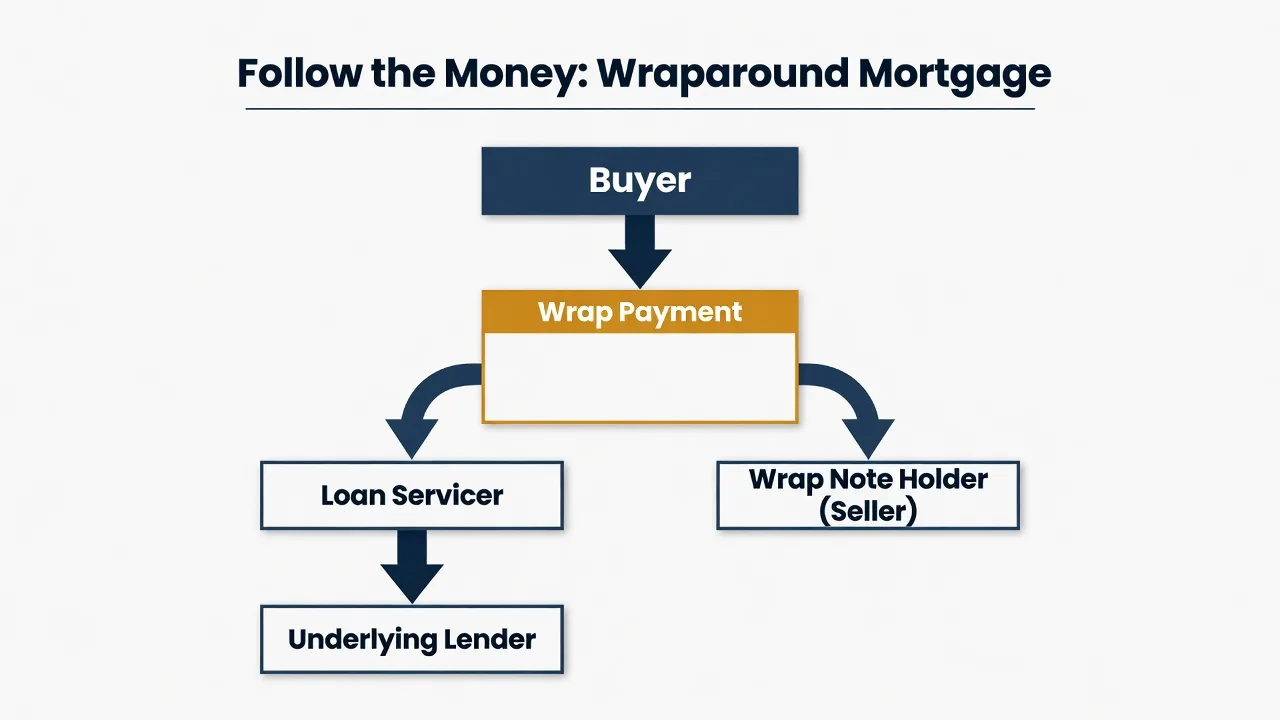
Follow the Money: Wraparound Mortgage
Buyer sends a single monthly payment to a Servicer. The Servicer splits the payment: part goes to the underlying Lender for the seller existing mortgage, and the balance goes to the seller (Wrap Note Holder). The buyer never pays the underlying lender directly.
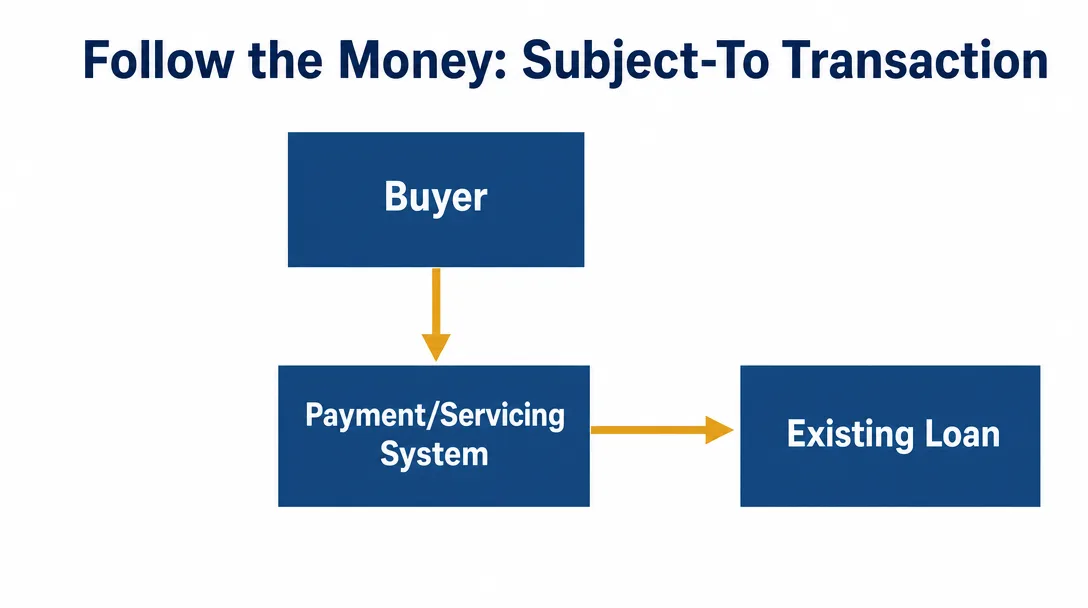
Follow the Money: Subject-To Transaction
In a subject-to transaction, the buyer takes title subject to the existing financing without formal assumption. Payments flow through the buyer payment system directly to the existing lender, with the original borrower remaining obligated.
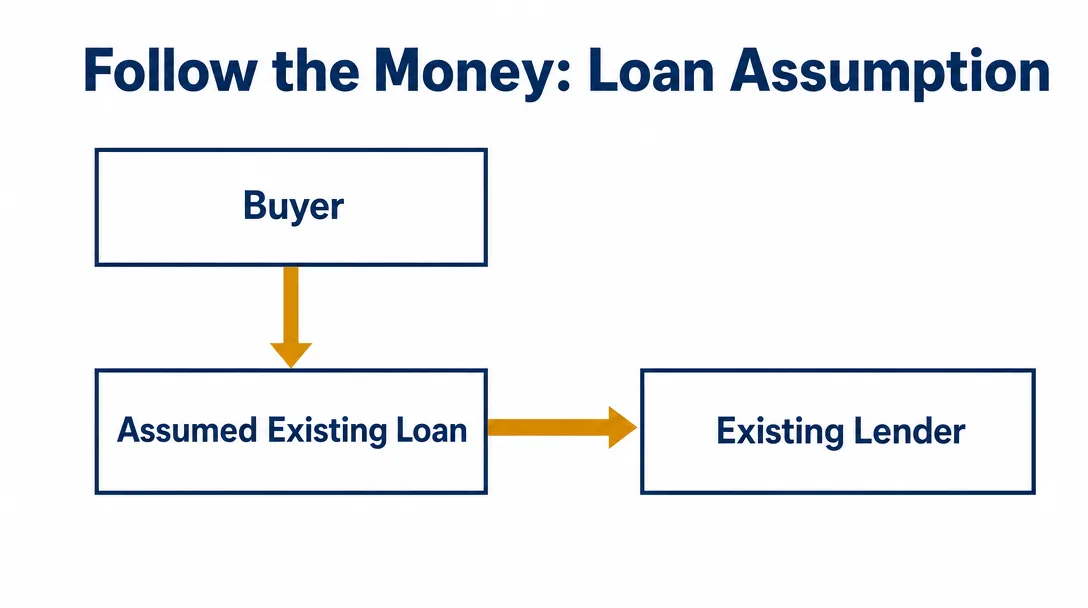
Follow the Money: Loan Assumption
In a loan assumption, the buyer takes over the existing mortgage through a lender-approved process and becomes the borrower of record.
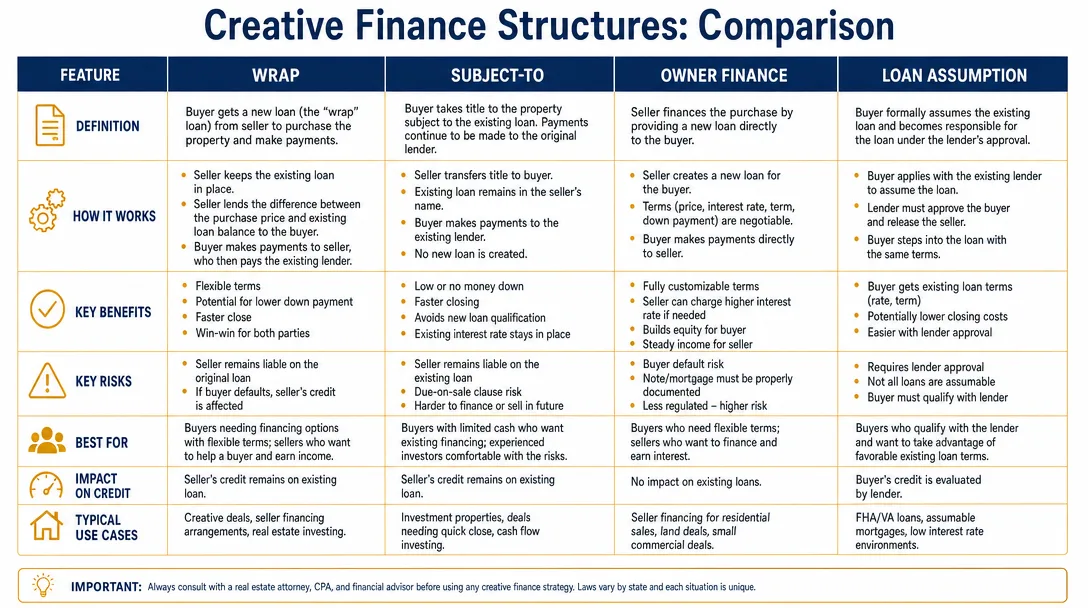
Comparison Table: Wrap vs Subject-To vs Owner Finance vs Loan Assumption
| Characteristic | Wrap | Subject-To | Owner Finance | Loan Assumption |
|---|---|---|---|---|
| Existing loan remains | Yes | Yes | No (if free and clear) | Yes, assumed |
| Original borrower remains obligated | Yes | Yes | N/A | Typically released |
| New seller financing created | Yes | No | Yes | No |
| Lender approval | Not typically | Not typically | N/A | Yes |
| Ownership transfer | Varies by structure | Title transfers | Title transfers | Title transfers |
| Servicing | Wrap servicer needed | Buyer pays lender | Seller or servicer | Buyer pays lender |
| Due-on-sale considerations | Yes | Yes | Varies | No (approved) |
| Typical use | Seller has equity + low-rate loan | Preserve existing financing | Free-and-clear or no underlying | FHA/VA assumable loans |
| Closing complexity | High | Moderate | Moderate | Moderate |
Key Components of a Wrap Transaction
Existing Mortgage
The seller existing mortgage remains in place. See What Happens to the Underlying Loan in a Wrap?
Wrap Note
The buyer signs a promissory note for the amount financed by the seller, secured by a deed of trust. For more on security instruments in real estate, see What Is a Wraparound Deed of Trust? and What Is an Unreleased Deed of Trust?
Wrap Deed of Trust
The wrap deed of trust secures the buyer obligation. It sits behind the existing mortgage in lien priority. See What Is a Wraparound Deed of Trust?
Servicing
The payment flow from buyer to servicer to underlying lender must be established. See Who Makes Payments in a Wrap Transaction?
Due-on-Sale Clause
The underlying loan documents may allow acceleration. See What Is a Due-on-Sale Clause in Creative Finance?
Insurance and Taxes
The parties must determine who carries insurance and pays taxes during the wrap term.
Default and Payoff
If the buyer defaults, the seller can foreclose under the wrap deed of trust. If the seller defaults on the underlying loan, the lender can foreclose, extinguishing the wrap.
Sale or Refinance
When the property sells or is refinanced, both the underlying loan and the wrap must be addressed.
Wrap vs Related Structures
Wrap vs Owner Financing: All wraps are owner financing, but not all owner financing involves an underlying mortgage. See Wrap vs. Owner Financing.
Wrap vs Subject-To: Both may keep existing financing, but a wrap creates new seller financing while subject-to does not. See Wrap vs. Subject-To.
Wrap vs Assumption: An assumption transfers the loan to the buyer with lender approval. A wrap keeps the seller on the underlying loan. See What Is a Loan Assumption?
Wrap Closing Process
Closing a wrap transaction requires: telling the title company the full structure, examining title and liens, reviewing underlying financing, documenting new terms, establishing lien priority, preparing documents, compliance review, signing and recording, and beginning servicing. See How Does a Wrap Transaction Close?
WATCH: Scott Horne on Wraparound Mortgages
Scott Horne explains why a seller might offer a wraparound mortgage.
FAQs
Is a wraparound mortgage legal?
Wraparound mortgages are used subject to applicable federal and state laws and loan document terms.
Does title insurance cover wraps?
Coverage depends on the specific structure and underwriting. Not all title companies will insure a wrap.
Can I use a wrap if the seller has no mortgage?
That would be owner financing, not a wrap. A wrap requires existing debt to wrap around.
All Wrap Articles
What Is a Wraparound Mortgage?
A wraparound mortgage is a creative financing arrangement where a seller finances the buyer purchase while existing financing remains in place.
How Does a Wraparound Mortgage Work?
In a wraparound mortgage, the buyer purchases with seller financing while the existing mortgage remains.
Wraparound Mortgage vs. Subject-To
Both wraps and subject-to may keep existing financing in place, but a wrap creates new seller-financed obligation.
Wraparound Mortgage vs. Owner Financing
Owner financing is the broad category. A wrap is one type involving underlying financing that remains.
How Does a Wrap Transaction Close?
Closing a wrap requires understanding ownership, liens, underlying financing, new terms, documents, servicing, and title requirements.
What Is a Wraparound Deed of Trust?
A wraparound deed of trust secures the buyer obligation to the seller in a wrap while underlying financing remains.
Who Makes Payments in a Wrap Transaction?
Buyer pays under the wrap while the underlying mortgage keeps being paid. Professional servicing helps manage the flow.
What Happens to the Underlying Loan in a Wrap?
The underlying loan generally remains unless separately paid off or released. Original borrower remains responsible.
What Is a Due-on-Sale Clause in Creative Finance?
A due-on-sale clause allows a lender to accelerate after certain transfers. A real concern in creative finance.
Ready to Structure a Wrap Transaction?
1st Option Title has experience with wraparound mortgages and other creative finance structures. Contact us before closing.