Quick Answer
A wraparound mortgage (wrap) is a creative-finance arrangement in which a seller finances the buyer purchase of a property while the seller existing mortgage remains in place. The new obligation wraps around the existing debt, meaning the buyer makes payments under the wrap and the seller continues paying the underlying lender.
A wraparound mortgage is one of the more misunderstood structures in creative real estate finance. Some treat it as a simple seller-financing arrangement. Others confuse it with a subject-to transaction. The reality is more specific.
How It Works: The Numbers
Property worth $400,000. Seller existing mortgage: $200,000 at 4%. Buyer puts $50,000 down. Seller finances $350,000 at 6%. The $200,000 underlying mortgage stays in place. The seller holds a note from the buyer for $350,000 and remains obligated on the $200,000 loan.
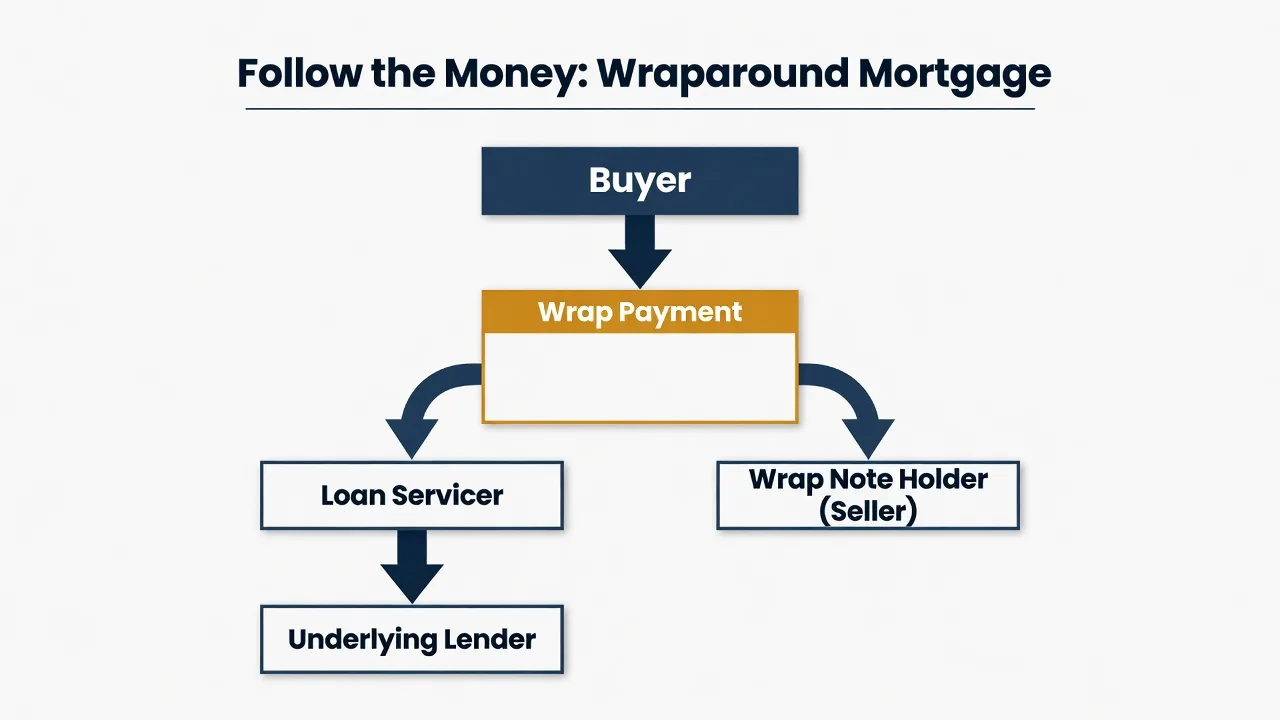
Follow the Money: Wraparound Mortgage
Buyer sends payment to Servicer who splits it: part to underlying Lender, balance to seller (Wrap Note Holder).
Does the Existing Mortgage Go Away?
No. The seller existing mortgage generally remains in place. See What Happens to the Underlying Loan in a Wrap?
Due-on-Sale Concerns
Most conventional mortgages contain a due-on-sale clause. Title insurance does not cover due-on-sale acceleration risk. See What Is a Due-on-Sale Clause?
Why Servicing Matters
Professional servicing helps manage the payment chain from buyer to underlying lender. See Who Makes Payments in a Wrap?
FAQs
Is a wraparound mortgage legal?
Wraparound mortgages are used in certain real estate transactions, subject to applicable laws and loan document terms.
Is title insurance available?
Coverage depends on the structure and underwriting guidelines. 1st Option Title has experience evaluating these transactions.